Draft: this guide is not published yet and is being reviewed.
Video surveillance: is a sign mandatory?
Last checked: 2 November 2026Information, not legal advice. See the note at the end.
What the Federal Act on Data Protection (FADP) and the Federal Data Protection and Information Commissioner (FDPIC) say about informing people of a camera, what the sign should say and what a private camera may film.
In short
- The Federal Act on Data Protection (FADP) requires that data subjects be informed in an appropriate manner when their personal data is collected (Art. 19 FADP). It does not prescribe a particular sign.
- The FDPIC writes that information about video surveillance “should be provided by means of a clearly visible sign”, and that people must be informed before they enter the camera's recording area.
- According to the FDPIC, the recording area of a private camera must be limited to the operator's own property.
Fedlex says of its English version of the FADP, which the quotations below come from: “English is not an official language of the Swiss Confederation. This translation is provided for information purposes only and has no legal force.”
Which law applies
Under Art. 2 para. 1, the FADP applies to the processing of personal data of natural persons by “private persons” and by federal bodies. Under Art. 5 let. a FADP, personal data means “any information relating to an identified or identifiable natural person”. The FDPIC states that where private individuals install cameras, “this is governed by the Federal Act on Data Protection if people appearing on the recorded images can be recognised”.
Under Art. 2 para. 2 let. a, the FADP does not apply to “personal data being processed by a natural person exclusively for personal use”. The Act does not say in more detail when a camera falls under this exception.
Cameras run by municipalities and cantons are not covered by these rules for private persons. According to the FDPIC, data processing “by municipal and cantonal authorities is the responsibility of the data protection supervisory authorities of the cantons or municipalities”. For private parties, the FDPIC is the authority responsible.
What the law says about informing people
Under Art. 6 para. 3 FADP, personal data “may only be collected for a specific purpose that the data subject can recognise”. Art. 19 para. 1 FADP provides: “The controller shall inform the data subject in an appropriate manner when collecting personal data”. Under Art. 5 let. j FADP, the controller is whoever determines the purpose and the means of processing.
Art. 19 para. 2 FADP names this minimum content:
- the controller's identity and contact details,
- the purpose of processing,
- if applicable, the recipients or the categories of recipients to which personal data is disclosed.
The duty to provide information ceases to apply, among other cases, if the data subject already has the information concerned (Art. 20 para. 1 let. a FADP). The FDPIC writes: “These exceptions must be narrowly interpreted”.
What the FDPIC says about the sign
In its guidance on video surveillance by private individuals, the FDPIC writes:
- “The persons concerned must be informed that they are being filmed before they enter the camera's recording area.”
- In its tips for responsible persons: “Information about video surveillance should be provided by means of a clearly visible sign.” If it is not already clear from the circumstances, the sign should also state who is responsible for the video surveillance, that is, where the persons concerned can exercise their rights, for example obtain information about the data collected.
- On form in general, the FDPIC writes that “the FADP does not require the information to be communicated in a specific form”. It lists a pictogram among the possible forms.
Neither the FADP nor the FDPIC names a prescribed wording or a prescribed pictogram. The Act does not say exhaustively which details are appropriate in a given case; if in doubt, ask a specialist.
What a private camera may film
The FDPIC writes:
- “the recording area must be limited to their own property. Neither the neighbouring property nor the public space (e.g. pavement) may be recorded.”
- “Generally speaking, private individuals are not permitted to operate CCTV systems on public property.” If the intrusion into public areas is negligible and surveillance of the private property would otherwise be impossible, the FDPIC writes that “common sense dictates that surveillance will normally be allowed”.
- For an area or room used by a certain group of people, such as the garage or laundry room, the FDPIC writes that “anyone else who uses this area must be consulted in advance”.
- According to the FDPIC, measures with a lesser impact on private life, such as additional locks or alarm systems, are preferable to video surveillance.
- According to the FDPIC, a camera monitoring your own property does not require a special permit, “not even from the FDPIC”.
If a camera films an area that is not normally used exclusively by the person operating it, the FDPIC writes that “the interest in protection of other persons affected by this video surveillance must be taken into account as part of a balancing of interests”. On the same page it refers to the Federal Supreme Court's case law on video surveillance in an apartment building (BGE 142 III 263, available in German).
How long recordings are kept
Under Art. 6 para. 4 FADP, personal data “shall be destroyed or anonymised as soon as they are no longer required for the purpose of processing”. For private individuals the FDPIC gives “usually 24 hours” as a guide, and for the workplace deletion “within 24 to 72 hours”. These periods are not in the Act; they are the FDPIC's practice. If viewing after an incident is sufficient, the FDPIC writes that “the images should not be viewed unless an incident occurs”.
Cameras with a microphone: the FDPIC recommends checking whether the microphone can be deactivated before installation. It also writes that the Criminal Code prohibits “recording private conversations (Art. 179bis-ter SCC)”.
In the workplace
The FDPIC writes: “The use of video surveillance systems for the targeted monitoring of employee behaviour is prohibited (Art. 26 para. 1 of the Ordinance to the Employment Act, EmpO 3)”. If video surveillance is necessary for other reasons, it writes that “it should be organised in a way that does not interfere with employees’ health or their freedom to move around normally without being under constant surveillance”. On signage in the workplace, the FDPIC writes: “Monitored areas must be clearly signposted.”
What applies to violations
Under Art. 60 para. 1 FADP, “On complaint, a fine not exceeding 250,000 francs shall be imposed on private persons” who wilfully fail to provide information to the data subject in accordance with Art. 19 para. 1 FADP. The amount of CHF 250 000 is an upper limit. The FDPIC states: “There are no criminal penalties for negligent breaches of data protection obligations.” Prosecution is a matter for the cantons (Art. 65 para. 1 FADP).
Anyone being filmed may request information from the controller on whether personal data relating to them is being processed (Art. 25 para. 1 FADP), and actions to protect the personality are governed by the Civil Code (Art. 32 para. 2 FADP).
Frequently asked questions
Is a sign mandatory for video surveillance?
The FADP does not prescribe a particular sign. In Art. 19 it requires that data subjects be informed in an appropriate manner. The FDPIC writes that this information should be provided by means of a clearly visible sign, and that people must be informed before they enter the recording area.
Is there a prescribed text or pictogram?
No. According to the FDPIC, the FADP does not require the information to be communicated in a specific form. Art. 19 para. 2 FADP does, however, name the minimum information: who the controller is and how to contact them, the purpose and, if applicable, who receives the data.
May my camera film the pavement or the neighbouring property?
According to the FDPIC, no: the recording area must be limited to your own property. Only if the intrusion into public areas is negligible and surveillance of the private property would otherwise be impossible will this normally be allowed. In a dispute, a court decides what applies in the individual case.
The right sign
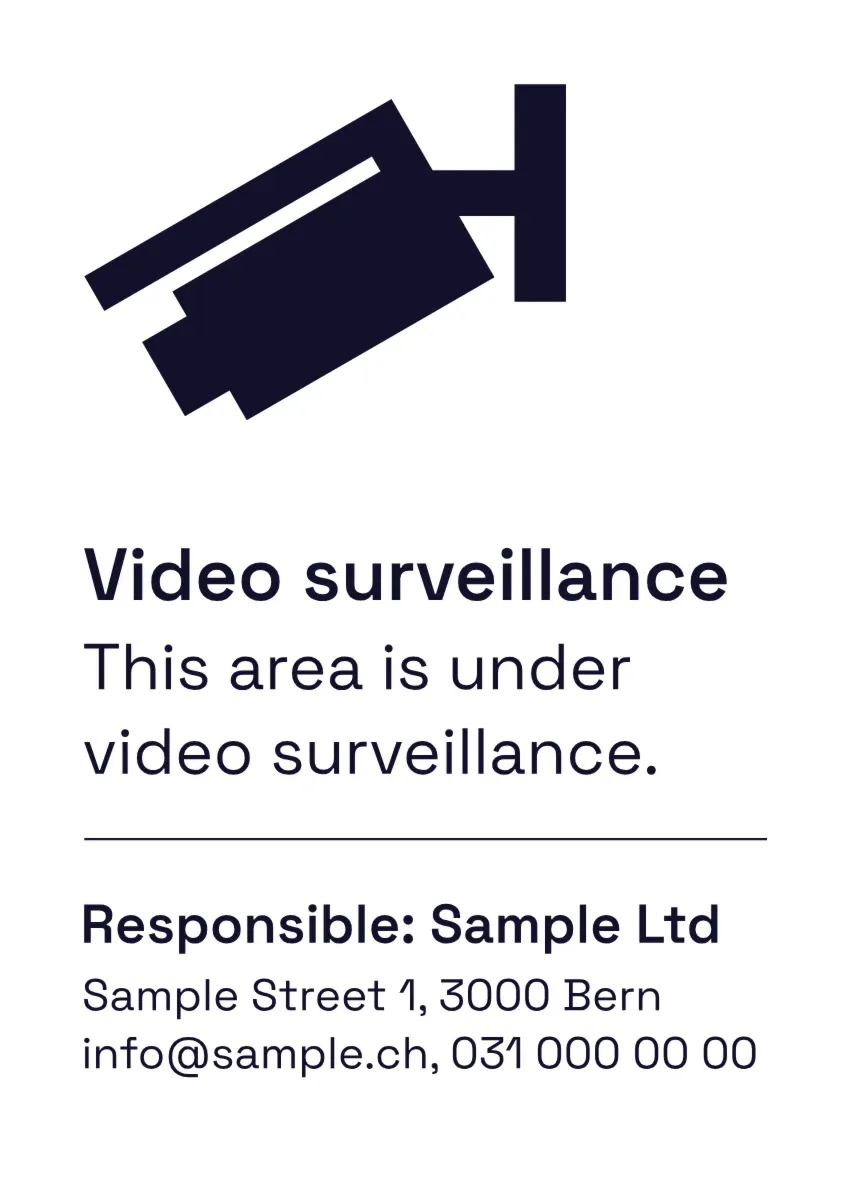
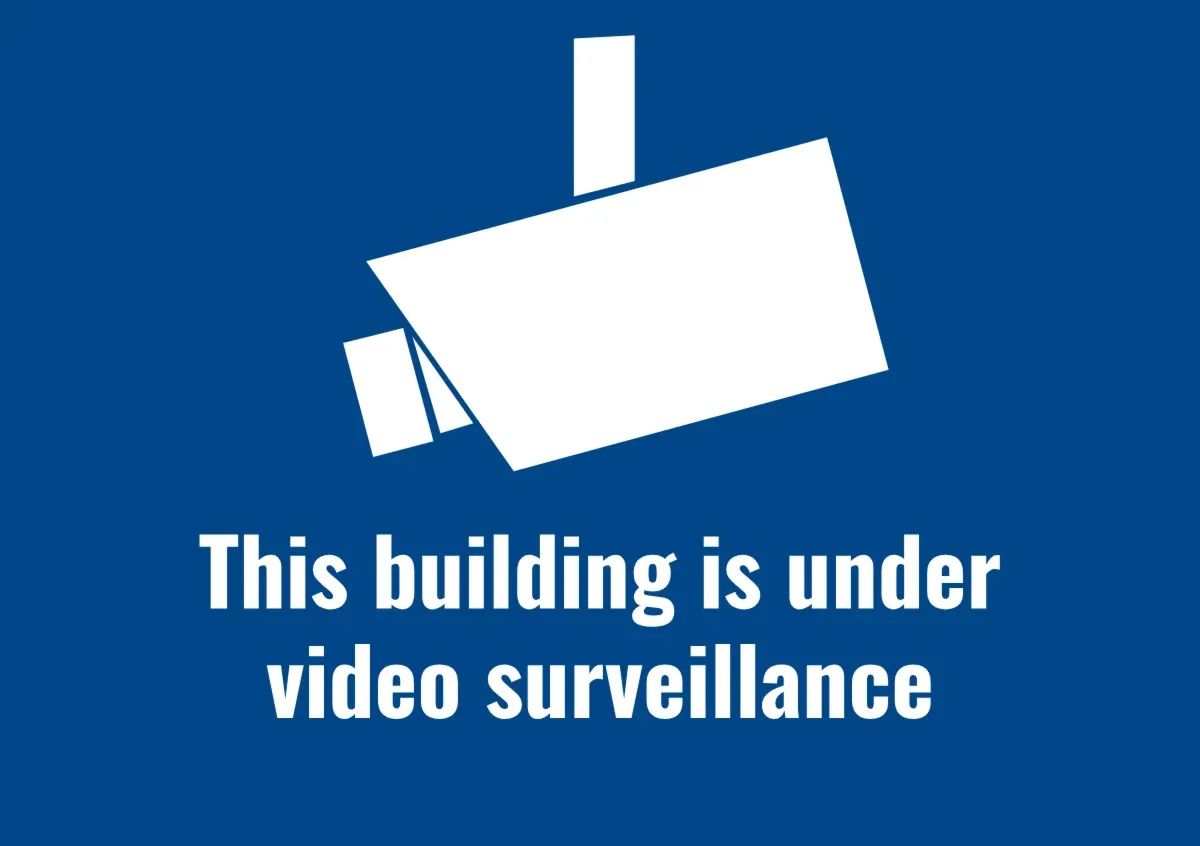
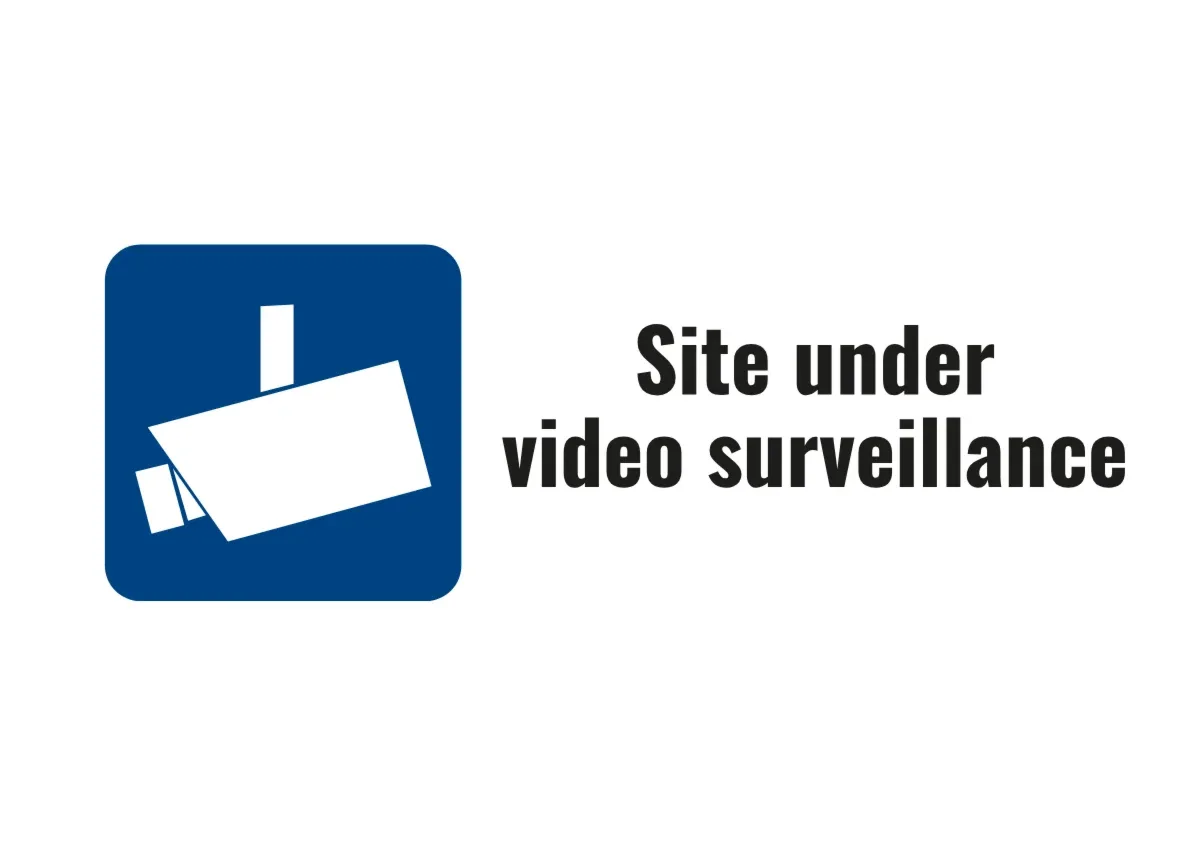
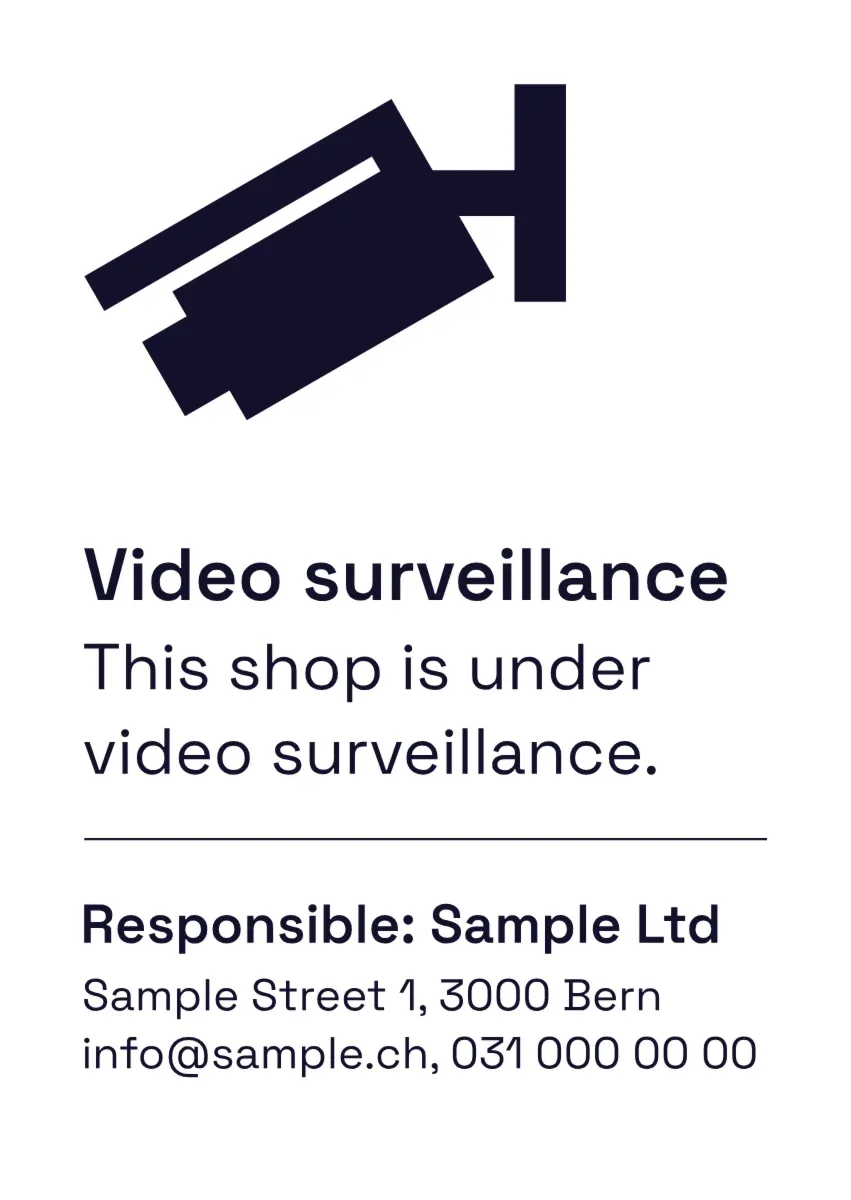
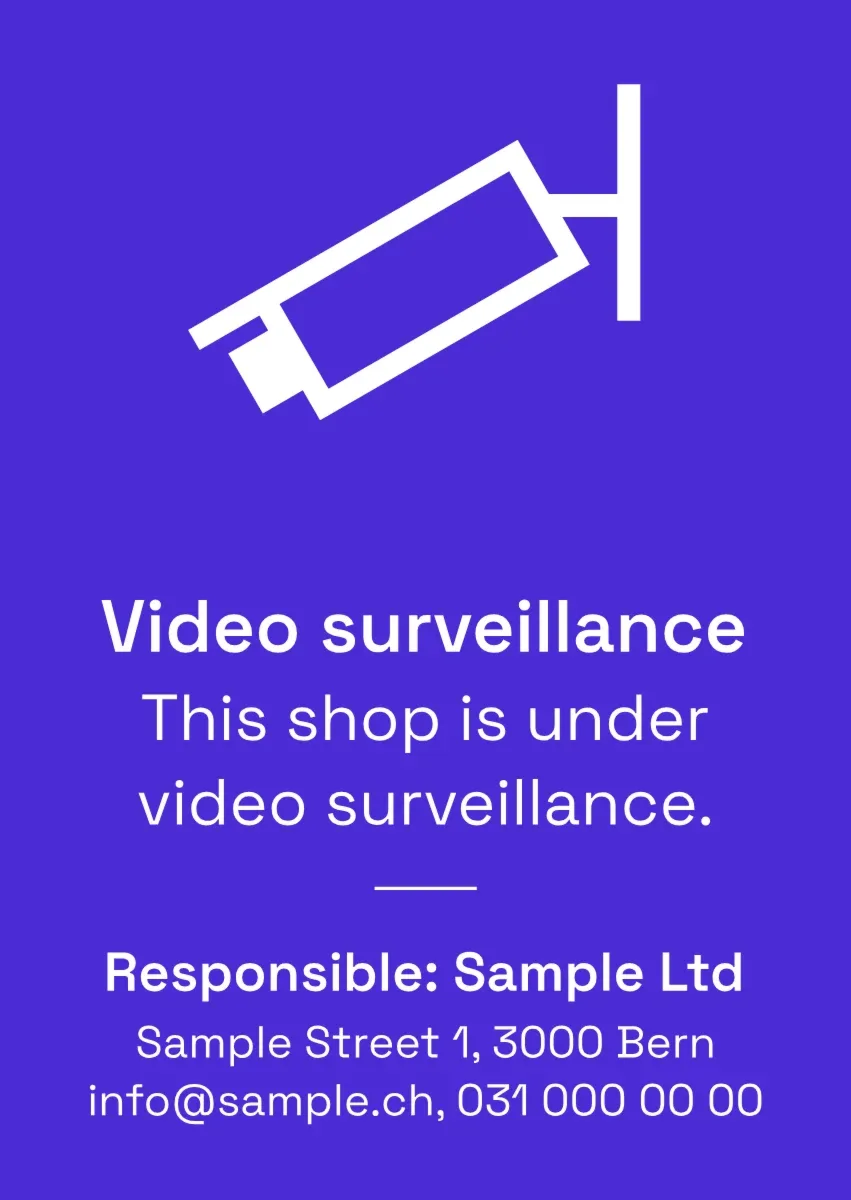
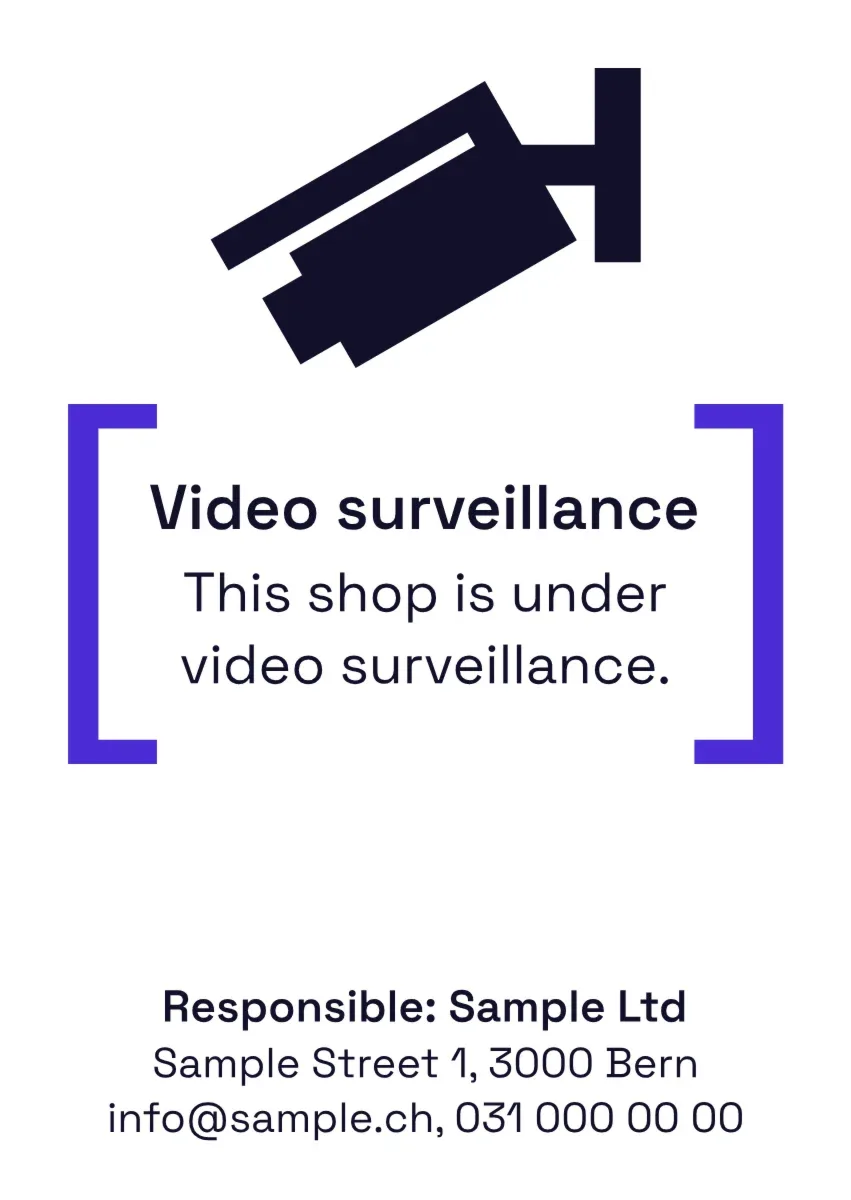
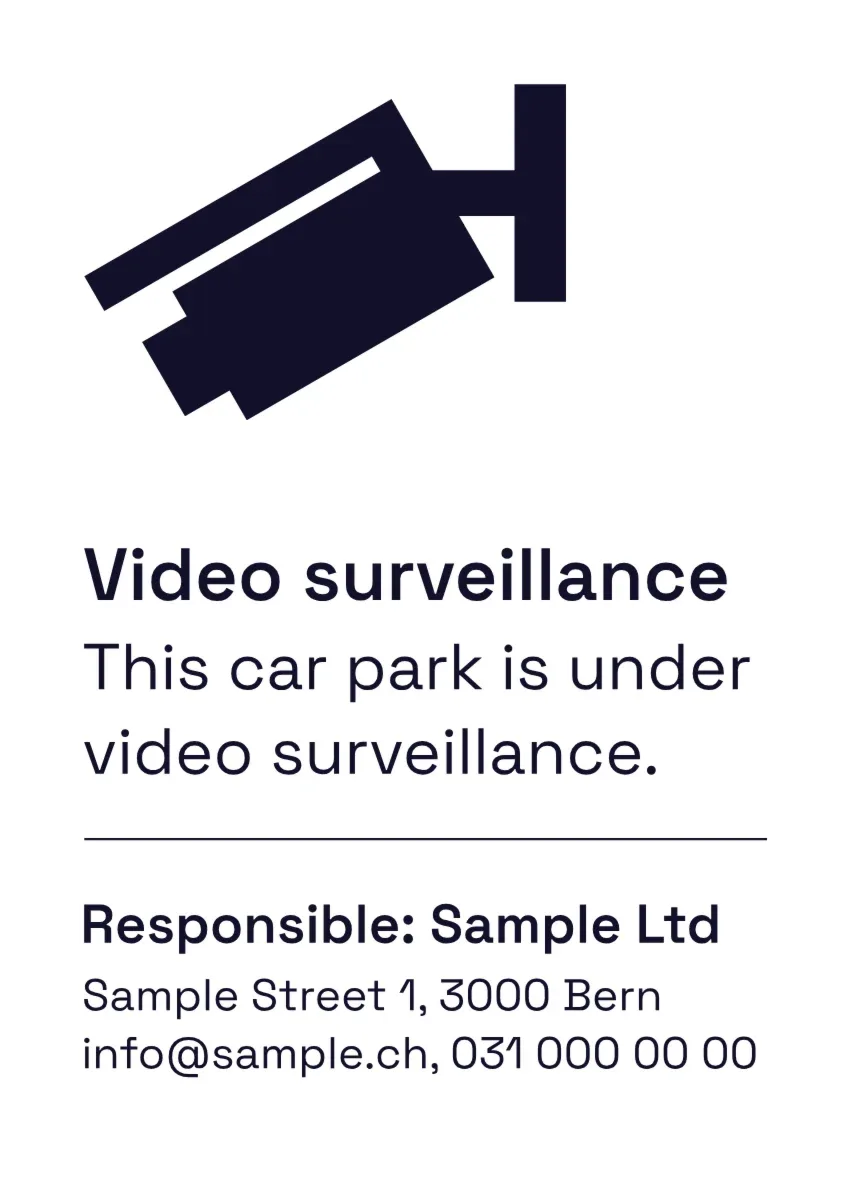
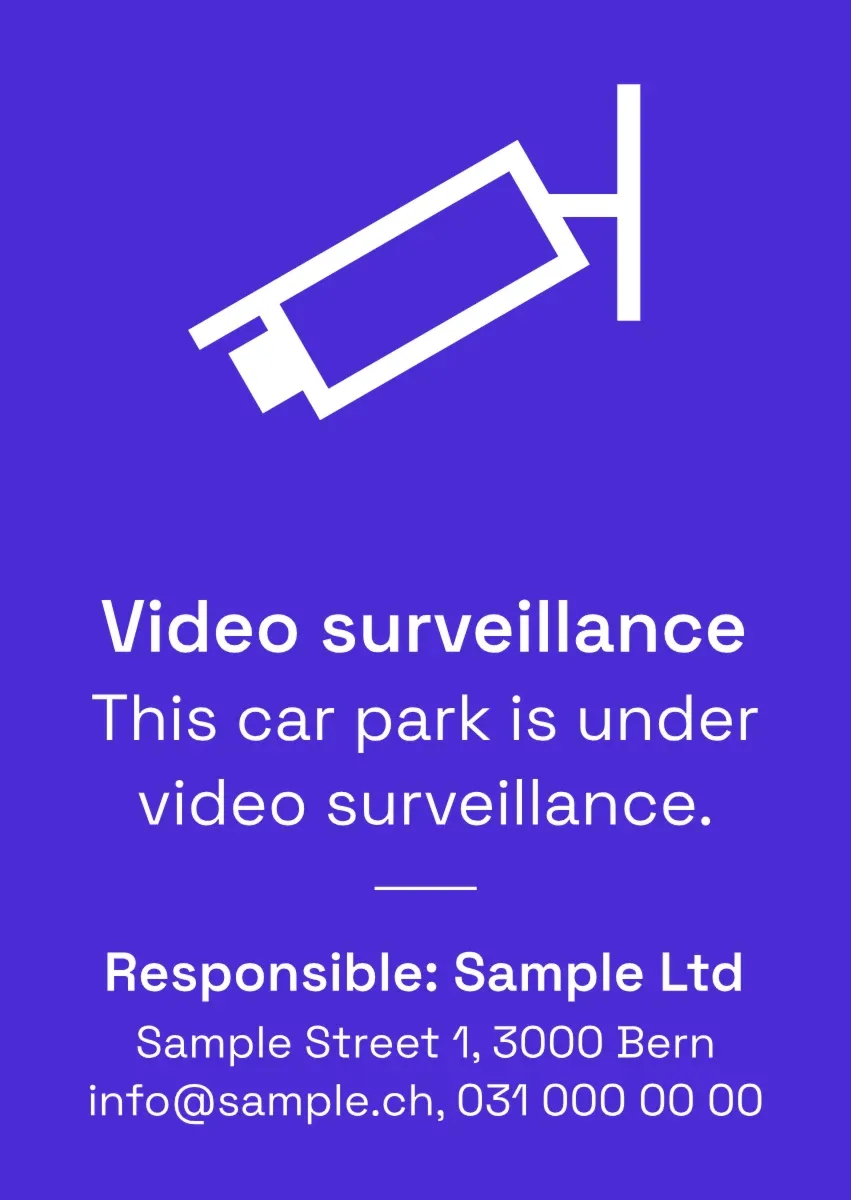
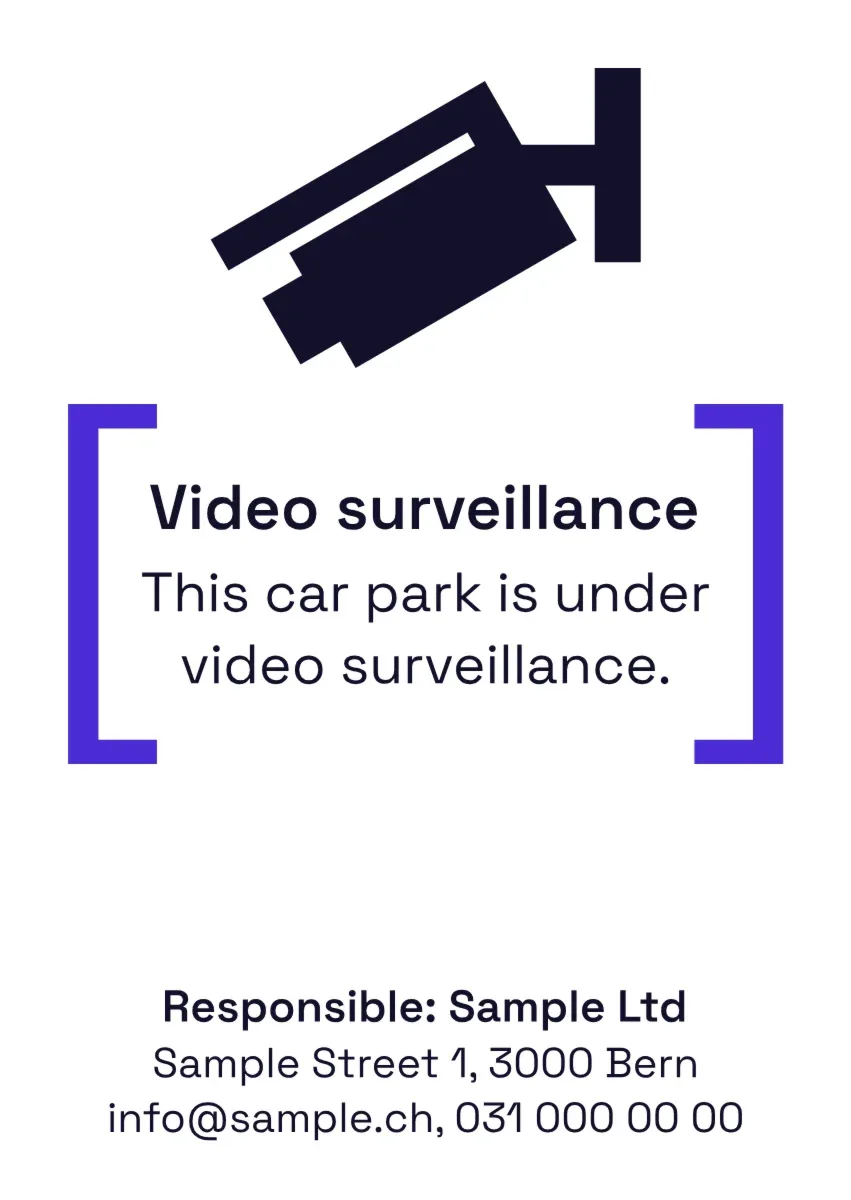
The “Video surveillance” sign with contact details has room for the responsible person or company and the contact details. For entrances and grounds there is “This building is under video surveillance”, for site fences “Site under video surveillance”, for shops “This shop is under video surveillance” and for car parks “This car park is under video surveillance”. You choose the text, size and material; the FDPIC says where the sign belongs: before people enter the camera's recording area.
Sources
- Federal Act on Data Protection (FADP), SR 235.1, Art. 2, 3, 5, 6, 8, 19, 20, 25, 30, 31, 32, 60, 65, 66 (last amended on 7 July 2025; English translation without legal force)fedlex.admin.ch
- FDPIC: Video Surveillance by Private Individualsedoeb.admin.ch
- FDPIC: Video Surveillance of Public Places by Private Individualsedoeb.admin.ch
- FDPIC: Video surveillance in the neighbourhoodedoeb.admin.ch
- FDPIC: Video surveillance in the workplaceedoeb.admin.ch
- FDPIC: Duty to provide informationedoeb.admin.ch
- FDPIC: Criminal lawedoeb.admin.ch
- FDPIC: Tasks: data protectionedoeb.admin.ch